
Is Snorkeling Included on a Dia Island Cruise?
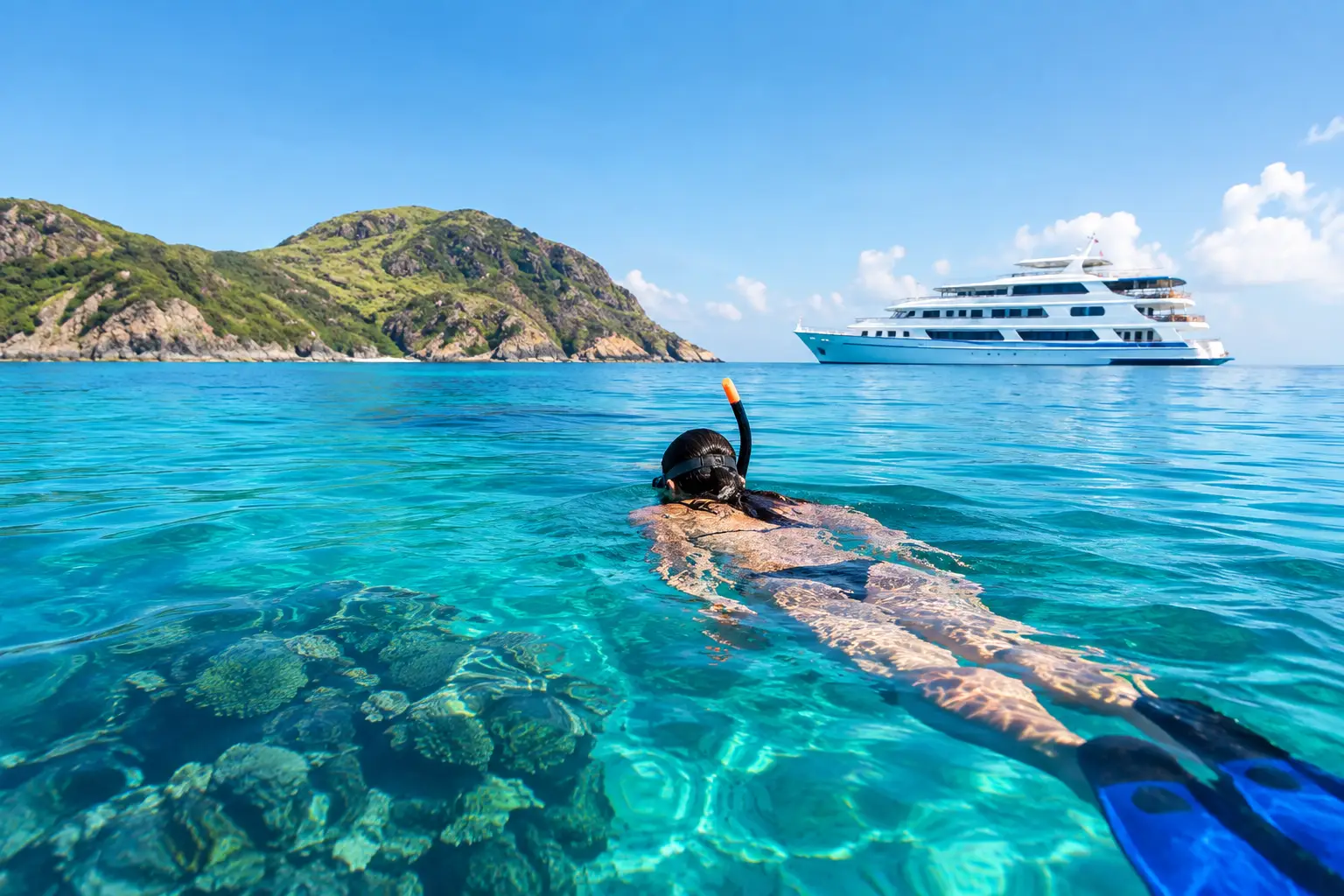
The question “is snorkeling included?” usually means something more practical: Will there be time to get in the water, can everyone join in, and do you need to bring a bag full of gear? On a sailing trip to Dia Island, snorkeling is typically part of the experience, not an extra activity squeezed into the day. Once the yacht anchors in one of the island’s clear, sheltered bays, the sea becomes your place to swim, float, look below the surface, or simply relax in the sunshine.
That said, every cruise format and weather day has its own rhythm. Knowing what snorkeling includes - and what it does not promise - helps you choose the right outing and arrive ready to enjoy it.
Is snorkeling included on a sailing cruise?
On Dia Island day cruises with Cretan Yachts, snorkeling is included as part of the swimming stop. Guests can use snorkeling equipment provided onboard and explore the clear Aegean water at their own pace while the crew remains nearby. You do not need previous snorkeling experience to enjoy the stop.
The experience is designed for holidaymakers, not only confident swimmers or experienced sailors. Some guests spend a long time following fish and rocky seabed contours near the yacht. Others take a short dip, use a float, then return to the deck for a cold drink and a comfortable spot in the shade. Both are exactly the right way to enjoy a day at sea.
Equipment availability and the planned time in the water should always be clear in the cruise details before booking. A well-organized trip makes it easy: you board, settle in, sail toward Dia, and have the gear and crew support ready when it is time to swim.
What the snorkeling stop at Dia Island feels like
Dia Island sits just off the coast of Heraklion, and its quiet coves offer a refreshing contrast to a busy beach day. As the yacht approaches the anchorage, the color of the water often shifts from deep blue to bright turquoise. After the anchor is down, there is time to enjoy the setting without a crowded shoreline, loud beach bars, or the rush of moving from one attraction to the next.
Snorkeling is usually done from the anchored yacht. Guests enter the water using the onboard swim access, then stay close to the boat or explore the immediate area depending on their confidence and the conditions. The crew can point out the best side of the yacht for entering the water and help guests feel comfortable with the equipment.
Visibility is often excellent, but nature sets the terms. Sun angle, wind, recent sea conditions, and the specific anchorage all influence what you see below the surface. Expect clear water, rock formations, and small marine life rather than a staged aquarium experience. That honest, peaceful connection with the sea is part of Dia’s charm.
Swim time matters as much as the gear
A snorkeling mask is only useful if the itinerary leaves room to use it. On a half-day cruise, the schedule balances sailing, anchoring, swimming, refreshments, and the return journey. A full-day or private sailing experience may allow more flexibility around how long your group stays in the water.
If snorkeling is a main reason for booking, consider which pace suits you. A morning cruise can be ideal for guests who want to swim in bright daylight and keep the rest of the day open. A sunset cruise offers a beautiful, relaxed atmosphere, though the focus may naturally lean more toward sailing, views, and the changing evening light. Private trips are particularly appealing for families or groups who want to shape the day around extra swim time.
Do you need to bring your own snorkeling equipment?
In most cases, no. Provided masks and snorkels mean you can travel lighter and avoid trying to fit wet gear into your vacation luggage. Bringing your own mask is still a good option if you are particular about fit, use prescription equipment, or simply prefer familiar gear.
A good mask seal makes a noticeable difference. Long hair should be pulled away from the mask edge, and sunscreen should be applied before putting it on. Ask the crew for help if water gets inside or the straps feel uncomfortable. A quick adjustment is often all it takes.
You may also want to bring a swimsuit, towel, reef-conscious sunscreen, and a cover-up for the sail back. Even in warm weather, the breeze can feel cool after swimming. The yacht provides the setting and essential snorkeling gear; a little personal preparation keeps you comfortable from boarding to return.
Is snorkeling suitable for children and first-timers?
For many families, the snorkeling stop becomes the moment children remember most. The key is to match the activity to each child’s swimming ability and confidence. Children who are comfortable in water may enjoy looking through a mask near the yacht, while younger or less confident swimmers can float, splash, and take short supervised turns instead.
First-time snorkelers do not need to force themselves into a long swim. Start by practicing slow breathing with the snorkel while holding onto the swim platform or a flotation aid. Once breathing feels natural, place your face in the water and look down. There is no prize for going far from the boat. The best first snorkeling experience is one that feels calm, safe, and fun.
Parents should remain actively involved with their children in the water. Professional crew support adds reassurance, but it does not replace parental supervision. Let the crew know when boarding if anyone in your party is nervous in the water, has limited mobility, or needs extra assistance. This allows the team to offer more thoughtful guidance at the right moment.
Safety, conditions, and realistic expectations
A premium sailing day should feel relaxed because the safety planning happens behind the scenes. The captain monitors weather and sea conditions, selects an appropriate anchorage, and manages the yacht while guests swim. If conditions are not suitable for snorkeling at a particular spot, the crew may adapt the plan. That is good seamanship, not a compromise in service.
Guests also have a role to play. Listen to the safety briefing, enter and exit the water where directed, and tell the crew if you are tired or uneasy. Avoid swimming beyond the agreed area, particularly when wind or current is present. If you have a medical condition that could affect swimming, prepare accordingly and speak up before entering the sea.
There is a difference between snorkeling being included and every guest needing to snorkel. You can enjoy Dia Island from the deck with a drink, a book, or a conversation while others are in the water. Couples and groups often appreciate that everyone can have the same beautiful stop in their own way.
Choosing the cruise that fits your group
The best choice depends on why you are going out on the water. A couple looking for an easy, romantic afternoon may prefer a sunset sailing cruise with a swim and snorkeling stop as one part of the experience. Families often value a morning or full-day option, when the water time can feel less rushed. Friends may enjoy a semi-private trip for the social atmosphere, while a private yacht gives your group the most control over timing and pace.
Ask practical questions before you book: Is snorkeling equipment available for all guests? How much time is planned at anchor? Are flotation aids available? Is the trip suitable for younger children or non-swimmers? Clear answers are a sign of a crew that takes hospitality and safety seriously.
The most memorable snorkeling moments are rarely about checking off a box. They are the quiet seconds when you look down through clear water, hear only your own breathing, and realize that the coastline behind you can wait a little longer.
